

Nearly half of popular supplements on store shelves are hiding something dangerous beneath a friendly label. A Clean Label Project study testing 160 protein powders found that 47% exceeded safety limits for heavy metals, with plant-based options containing five times more cadmium than whey, and chocolate flavors delivering up to 110 times more. That’s not a minor formulation quirk. That’s a systemic problem in an industry that relies on consumer trust while operating with minimal mandatory testing. If you’re taking supplements to support recovery, build muscle, or improve your skin, you deserve to know exactly what’s going into your body.
Table of Contents
- What are clean supplements?
- Why clean supplements matter: Health, recovery, and performance
- From ancestral nutrition to modern skincare: Holistic wellness in practice
- Risks of non-clean supplements: Contaminants and hidden downsides
- Choosing what’s right: Natural vs. synthetic nutrients
- The truth most people miss about clean supplements
- Explore clean supplements and holistic skincare with Cohld
- Frequently asked questions
Key Takeaways
| Point | Details |
|---|---|
| Clean means less risk | Choosing clean supplements reduces your exposure to hidden contaminants or banned substances. |
| Holistic benefits | Clean products support not just recovery but also skin, joint, and overall wellness. |
| Ancestral wisdom applies | Grass-fed, tallow-based, and natural supplements offer time-tested benefits for daily routines. |
| Certifications matter | Look for third-party testing and clear label claims to ensure supplement safety and effectiveness. |
What are clean supplements?
The word “clean” gets thrown around a lot in wellness circles, but it carries real meaning when applied to supplements. A clean supplement is one that is free from synthetic fillers, artificial colorings, hormone disruptors, undisclosed additives, and detectable levels of heavy metals or environmental contaminants. It’s not just about what’s on the label. It’s about what’s in the capsule.
Here’s what sets a genuinely clean supplement apart:
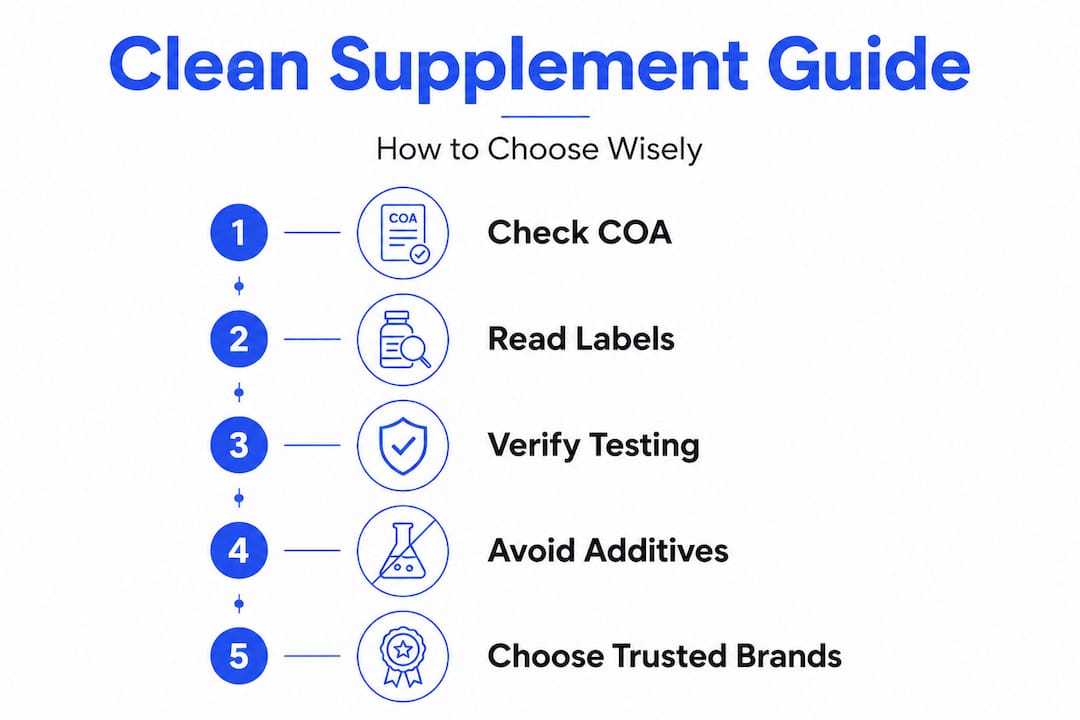
- Third-party tested: The product has been independently verified by an organization like NSF International or the Clean Label Project, not just self-certified by the manufacturer.
- Transparent ingredient sourcing: The brand discloses where ingredients come from, whether from grass-fed animals, certified organic farms, or GMP-compliant US facilities.
- No artificial additives: No artificial sweeteners, no synthetic flavors, no chemical preservatives that compromise the purity of the formula.
- Heavy metal tested: Each batch is screened for lead, cadmium, arsenic, and mercury below established safety thresholds.
- No proprietary blend hiding: Every ingredient and its dosage is listed clearly, with nothing tucked behind vague “blend” language.
The most persistent misconception is that “natural” on a label equals clean. The FDA does not regulate the word “natural” in the supplement space, which means a product can contain chemically extracted compounds, synthetic binders, and artificial colors while still advertising itself as natural. Understanding the difference between synthetic vs. natural supplements is one of the most important steps you can take for your health literacy.
Pro Tip: When evaluating a new supplement brand, look for a certificate of analysis (COA) on their website. A COA from a third-party lab that shows batch-specific results for heavy metals, microbial contamination, and potency is the gold standard of transparency.
Why clean supplements matter: Health, recovery, and performance
With the definition clear, the next question is practical. Do cleaner supplements actually work better? The data says yes, and the reasons go deeper than just avoiding contaminants.
For muscle recovery and body composition, the quality of your protein source matters enormously. A recent meta-analysis found that collagen supplementation produced a standardized mean difference (SMD) of 0.94 in fat-free mass gain compared to placebo, outperforming whey in certain populations, particularly when baseline protein intake was already adequate. Creatine and clean proteins also enhance training volume and muscle hypertrophy when overall protein intake is insufficient, making them smart additions to a recovery protocol rather than redundant ones.
| Supplement type | Fat-free mass gain (SMD vs. placebo) | Key benefit |
|---|---|---|
| Clean collagen peptides | 0.94 | Connective tissue repair, joint support |
| Whey protein (standard) | Moderate | Muscle protein synthesis |
| Creatine monohydrate | High | Training volume, power output |
| Placebo | 0 | Baseline comparison |
For skin health, the synergies are just as compelling. Experts recommend that clean collagen, omega-3 fatty acids, and NAD+ work together to support collagen synthesis, reduce systemic inflammation, and promote cellular repair at the mitochondrial level. These aren’t cosmetic benefits. They’re biological processes that affect how quickly your skin recovers from UV exposure, oxidative stress, and normal aging.
The key insight here is that contaminants undermine all of these benefits. If your collagen powder contains cadmium, that heavy metal actively competes with zinc in your body, disrupting enzyme function and collagen cross-linking. You could be paying for a high-quality peptide while also dosing yourself with a mineral disruptor that negates the benefit. That’s the hidden cost of choosing convenience over quality when shopping for grass-fed collagen for muscle recovery.
Pro Tip: Pair your clean collagen with a fish oil or algae-based omega-3 supplement. Omega-3s reduce the inflammatory response that slows connective tissue repair, which means your collagen works more efficiently post-workout. This is one of the most underutilized synergies in clean supplement stacking. For a deeper look at how to build a collagen routine, check out this collagen supplement guide.
From ancestral nutrition to modern skincare: Holistic wellness in practice
The principles behind clean supplements aren’t new. Long before protein powders existed, traditional cultures prioritized nose-to-tail eating, consuming organs, bone broth, and fat-based preparations that delivered concentrated, bioavailable nutrients. The modern clean supplement movement is, in many ways, a return to that logic applied through better sourcing and verified testing.
The core difference between modern processed supplements and ancestral-aligned ones comes down to bioavailability. Your body recognizes nutrients that come from whole food matrices. Grass-fed beef organs, for example, deliver retinol (the active form of vitamin A), heme iron, CoQ10, and B12 in ratios and forms that your digestive system evolved to absorb. Synthetic isolates often require enzymatic conversion steps that reduce how much you actually retain. Grass-fed organ supplements and tallow-based skincare align directly with this holistic wellness philosophy, providing bioavailable nutrients your body recognizes at the cellular level.
| Approach | Bioavailability | Additives | Skin/recovery support |
|---|---|---|---|
| Modern processed supplements | Variable, often lower | Frequent fillers and artificial flavors | Inconsistent |
| Ancestral clean supplements | High, whole-food matrix | Minimal to none | Strong and consistent |
| Tallow-based skincare | Topical absorption | Free of synthetic emulsifiers | Barrier repair, lipid replenishment |
Here’s how to bring ancestral wellness practices into a modern daily routine:
- Start with a grass-fed collagen or organ complex in the morning to support connective tissue and energy metabolism throughout the day.
- Use a tallow-based cream after cleansing to restore the skin’s lipid barrier. Tallow’s fatty acid profile closely mirrors human sebum, which means it absorbs readily without clogging pores.
- Add DMAE and CoQ10 for skin in your skincare routine for cellular energy support and tightening.
- Rotate in grass-fed liver capsules two to three times per week for natural retinol and B12 without the dosing risk of synthetic vitamin A supplements.
- Replace synthetic pre-workout drinks with clean creatine and electrolytes sourced without artificial additives.
Explore more of these principles in our breakdown of grass-fed supplements and why sourcing matters for your results.
Risks of non-clean supplements: Contaminants and hidden downsides
It’s one thing to choose quality. It’s another to understand what you’re protecting yourself from. The risks of choosing conventional or contaminated supplements are real, and for some people, the consequences extend far beyond gut discomfort or a bad workout.
Here are the most significant risks ranked by impact:
- Heavy metal accumulation: Cadmium, lead, and arsenic build up in soft tissue and bone over time. Chronic low-dose exposure from daily supplement use can impair kidney function, disrupt hormonal signaling, and increase cancer risk over years of use.
- Undisclosed pharmaceutical compounds: Some pre-workout and weight-loss supplements have tested positive for amphetamine analogs, sildenafil (Viagra), and anabolic steroids not listed on the label. These are not rare edge cases.
- Accidental doping violations: Athletes face doping risks from contaminants that don’t appear on labels. An NSF Certified for Sport designation is the only reliable protection for competitive athletes.
- Hormonal disruption from plasticizers and fillers: Bisphenol A (BPA) and phthalates can leach from poor-quality packaging or be present in synthetic fillers, potentially disrupting endocrine function in sensitive individuals.
- Microbiological contamination: Facilities that skip GMP compliance may produce supplements with mold, yeast, or bacterial contamination, particularly in moisture-sensitive powders.
“The supplement industry operates in a space where voluntary compliance is the norm. Consumers cannot rely on a label alone. Independent certification and batch-level testing are the only credible proxies for safety.” This reality puts the burden on you as a consumer to verify claims before spending money or risking your health.
For anyone training seriously, choosing a verified clean creatine formulation isn’t just about purity preference. It’s about protecting your eligibility, your health, and your investment in training.
Choosing what’s right: Natural vs. synthetic nutrients
Understanding clean sourcing is half the picture. The other half is knowing which form of a nutrient your body actually uses best. Not every synthetic vitamin is inferior, and not every natural extract is necessary. Making smart choices here is about matching the form of the nutrient to your physiology.
Some practical decision points to keep in mind:
- Vitamin C: Ascorbic acid (the synthetic form) is functionally equivalent to naturally derived vitamin C for most purposes. Studies consistently show no meaningful difference in bioavailability, so paying a premium for “food-derived” vitamin C isn’t always warranted.
- Vitamin E: Natural forms outperform synthetic ones here. Natural d-alpha-tocopherol is recognized and retained by the body at roughly twice the efficiency of synthetic dl-alpha-tocopherol. The “dl” prefix on a label is the tell.
- Vitamin D3: Natural D3 sourced from lanolin or lichen paired with vitamin K2 in MK-7 form significantly outperforms synthetic versions in raising and maintaining serum 25-OH-D levels. If you’re supplementing D3, the source genuinely matters.
- Magnesium: The form determines where it works. Magnesium glycinate supports sleep and nervous system calm. Magnesium oxide, the cheapest form, has poor absorption and mainly draws water into the gut.
- Collagen: Only hydrolyzed (broken-down) collagen peptides are bioavailable. Whole collagen protein is not meaningfully absorbed, regardless of how clean the source is.
The core insight is that choosing natural over synthetic is not a blanket rule. It’s a framework. Read labels for the specific chemical form of each nutrient, not just the headline claim.
The truth most people miss about clean supplements
Here’s the perspective that most wellness content won’t give you. The clean supplement movement has done genuinely important work in pushing for transparency, reducing contaminants, and holding manufacturers accountable. But there’s a growing tendency among health-conscious consumers to chase purity as an end in itself, and that’s where the logic breaks down.
Certification labels and clean sourcing matter deeply, but they don’t override your individual biology, your training load, your hormonal status, or your specific nutrient deficiencies. Someone with optimal dietary collagen intake may see minimal benefit from adding a peptide supplement, however clean it is. Someone training intensely with low baseline protein will respond dramatically to creatine regardless of which certified brand they choose.
The most results-driven approach isn’t buying the most expensive clean supplement stack you can afford. It’s starting with honest data about your own body, tracking how you respond, and adjusting based on actual outcomes rather than certification labels. Blood work every six months, noting changes in recovery quality, skin clarity, sleep, and joint comfort, gives you real feedback that no label can provide.
Purity perfectionism also creates anxiety that doesn’t serve your health. If you’re rotating through five clean supplements looking for the one that finally works, the problem is likely protocol design or lifestyle factors, not the supplement itself. Use this collagen guide for personalized wellness to build a focused, evidence-based routine rather than accumulating products.
Trust and transparency from your supplement brand are non-negotiable. But self-knowledge is equally essential. Clean is a starting point, not a destination.
Explore clean supplements and holistic skincare with Cohld
The principles in this article are exactly what we built Cohld around. Every product in our line starts with the same question: would we take this ourselves?

Cohld’s clean supplement collection includes third-party tested formulas sourced from grass-fed, pasture-raised animals, with no synthetic fillers, hormone disruptors, or artificial additives. Our pure grass-fed collagen peptides are hydrolyzed for maximum absorption and verified for heavy metal safety. For skin, our grass-fed tallow cream delivers the skin-identical lipids your barrier needs without the synthetic emulsifiers found in conventional moisturizers. If you’re ready to build a routine grounded in real sourcing transparency and ancestral nutrition principles, Cohld is where you start.
Frequently asked questions
How can I tell if a supplement is really clean?
Look for third-party testing certificates (NSF, Clean Label), fully transparent ingredient lists with specific forms listed, and no artificial additives or proprietary blends. The Clean Label Project found that 47% of popular protein powders exceeded heavy metal safety limits, making independent verification essential rather than optional.
Are clean supplements better for sensitive skin?
Yes, particularly when the formulation avoids synthetic emulsifiers, artificial fragrances, and hormone-disrupting additives. Grass-fed tallow-based skincare aligns with skin physiology because its fatty acid profile closely mirrors human sebum, reducing the risk of irritation and barrier disruption.
Do athletes need to worry about contaminated supplements?
Yes, seriously. Athletes risk accidental doping violations from undisclosed substances in non-verified products, and the only reliable safeguard is choosing supplements certified by NSF for Sport or a comparable body.
Is it worth paying more for clean supplements?
For most health-conscious individuals, yes. Reducing chronic exposure to heavy metals and endocrine-disrupting additives supports long-term wellness in ways that are difficult to quantify short-term. A Clean Label Project analysis of 160 powders showed just how widespread the contamination problem is across conventional brands.
When are synthetic nutrients okay in supplements?
For nutrients like vitamin C, synthetic forms are functionally equivalent. But for fat-soluble vitamins like D3 and E, natural forms offer meaningfully better absorption and retention. The form of the nutrient, not just the source, determines the real-world benefit.