

Maca root gets a lot of hype. You have probably seen it advertised as a natural fix for low energy, flagging libido, or hormonal chaos. But what is maca root, actually, and does the science match the marketing? This article gives you a straight answer: what maca root is, where it comes from, what the research actually shows about its benefits, how to use it safely, and how to pick a product worth your money.
Table of Contents
- Key takeaways
- What maca root actually is
- Evidence on maca root benefits
- How to use maca root safely
- Choosing a quality maca product
- My take on maca root
- Clean supplements from a brand you can trust
- FAQ
Key takeaways
| Point | Details |
|---|---|
| Ancient Andean root | Maca is a cruciferous plant from Peru used as food and medicine for thousands of years. |
| Promising but modest benefits | Research shows possible improvements in libido, energy, and mood, though evidence is mixed. |
| Safe at low doses | A daily dose of 1.5 to 3 grams for 2 to 3 months is considered safe for most adults. |
| Product quality varies widely | Up to 20% of US maca supplements contain the wrong species or added fillers. |
| Thyroid caution is real | People with thyroid conditions should consult a doctor before adding maca to their routine. |
What maca root actually is
Maca (Lepidium meyenii) is a root vegetable native to the Andes Mountains of Peru, growing at altitudes between 13,000 and 16,000 feet. Very few plants survive at that elevation. Maca does, and that resilience is part of what makes it biologically interesting.
It belongs to the same plant family as broccoli, cabbage, kale, and radishes. That family connection matters because it explains some of maca’s nutritional profile and also its safety considerations. Like its cruciferous relatives, maca contains compounds called glucosinolates, which give these plants their sharp flavor and some of their health properties.
Maca root nutrition at a glance:
- High in carbohydrates, with meaningful amounts of fiber
- Contains protein (roughly 10 to 14 percent by dry weight)
- Provides iron, calcium, potassium, and zinc
- Rich in bioactive compounds including macamides and macaridine, which appear unique to maca
- Classified as an adaptogen, meaning it may help the body manage physical and psychological stress
Andean communities have eaten maca as a staple food for over 2,000 years. Traditionally, it was boiled or baked, then consumed as a porridge or fermented into a drink called maca chicha. Spanish colonizers in the 16th century recorded that local populations fed it to livestock to improve their fertility and endurance at altitude. That practical, food-first tradition is worth remembering when you see maca marketed as a miracle supplement.
Maca was never a cure. It was a food. That context changes how you should think about adding it to your routine.
Evidence on maca root benefits
The most commonly claimed maca root benefits are improved libido, better energy, fertility support, relief from menopausal symptoms, and mood stabilization. Some of these claims have more research behind them than others.

Small trials suggest possible improvements in sexual desire and mood, but the evidence is limited, inconsistent, and often involves very small sample sizes. For menopausal symptoms specifically, experts note that hormone therapy is more effective than supplements like maca. Some observed benefits may also be attributed to the placebo effect, which is genuinely hard to rule out in supplement research.
Here is a realistic breakdown of what the research currently supports:
- Libido: The most consistently reported benefit. Multiple small studies show that maca root for energy and sexual desire may help, particularly in postmenopausal women and men dealing with antidepressant-related sexual dysfunction.
- Energy and stamina: Anecdotal reports are strong. Objective clinical evidence is weaker, though maca’s adaptogenic properties are biologically plausible.
- Fertility: Some animal studies are positive. Human evidence is very limited. Maca is not a fertility treatment.
- Menopausal symptoms: A few trials suggest modest relief from hot flashes and mood changes, but effects are inconsistent across studies.
- Mood: Reported improvements in anxiety and depression scores in some small trials, particularly in postmenopausal women. Not enough evidence to generalize.
Pro Tip: If you are considering maca for a specific health condition, treat it as a complement to your existing care plan, not a replacement. Talk to your doctor first, especially if you are managing hormonal or thyroid conditions.
Because maca supplements are not well-regulated, the quality of what you take directly affects whether you see any results. More on that below.
How to use maca root safely
Getting maca root right is mostly about dosage, timing, and form. None of it is complicated, but small mistakes can reduce effectiveness or cause unnecessary side effects.
- Start with the right dose. The safe daily dose is between 1.5 and 3 grams of maca root powder per day. Most clinical studies use this range over a 2 to 3 month period. Starting at the lower end gives your body time to adjust.
- Take it in the morning. Experts recommend taking maca in the morning or early afternoon. Its energizing adaptogenic effects can interfere with sleep if taken too late in the day.
- Choose your form wisely. Maca comes as raw powder, gelatinized powder, capsules, and maca root extract. Raw powder is widely available and affordable. Gelatinized maca is pre-cooked to remove resistant starches, making it gentler on the stomach and easier to absorb. Capsules are the most convenient option if you dislike the earthy taste. Extracts are more concentrated and easier to dose precisely.
- Mix powder correctly. Maca powder clumps in cold liquids. Make a small paste with warm water first, then add it to your smoothie or drink. Adding it after baking rather than during helps preserve its bioactive compounds.
- Know who should be cautious. Maca contains goitrogens that may affect thyroid hormone production. If you have thyroid issues, a hormone-sensitive condition, or are pregnant, consult your healthcare provider before use.
Pro Tip: Give any maca supplement at least 6 to 8 weeks before judging its effects. Most studies that report positive results run for 8 to 12 weeks at consistent daily doses.
Choosing a quality maca product
The maca supplement market has a real quality problem. Around 95% of US maca is imported from Peru’s highlands, with the Junín region producing the majority of the global supply. That geographic concentration makes the supply chain fragile. Climate events can trigger 10 to 25% price spikes, which creates pressure to cut corners.
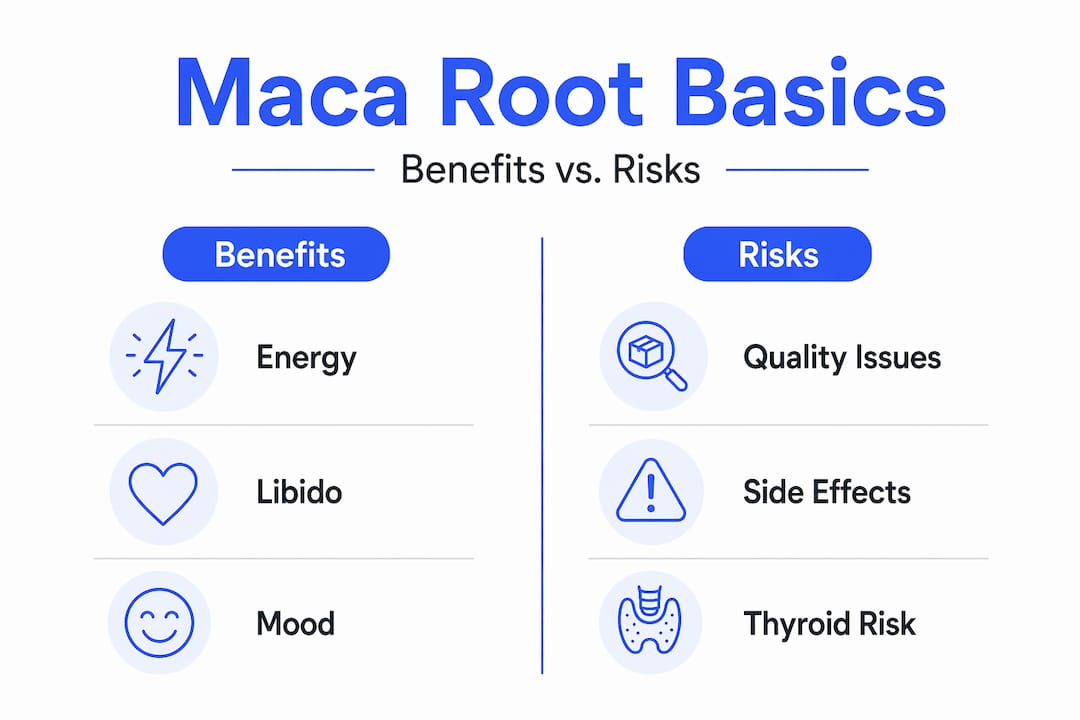
The result? Up to 20% of US maca products show adulteration, wrong species labeling, or added fillers when tested. That means you could be buying a product that contains almost no actual maca. Knowing what to look for protects you.
| Feature | What to look for | Why it matters |
|---|---|---|
| Third-party testing | NSF, USP, or Informed Sport certification | Confirms label accuracy and absence of contaminants |
| Maca form | Gelatinized vs raw | Gelatinized is easier to digest and costs 15 to 30% more |
| Species labeling | Lepidium meyenii confirmed | Avoids substitution with cheaper, unverified species |
| Country of origin | Peruvian highlands (Junín region) | Source quality affects potency |
| Ingredient list | No fillers, binders, or artificial additives | Protects you from adulterated products |
Understanding the difference between natural and synthetic supplements also helps here. A short check against a clean supplement checklist before you buy can prevent a lot of wasted money.
My take on maca root
I have followed the maca conversation for a long time, and I will be honest about what I have observed. The gap between what people expect from maca and what it actually delivers is real. People come to it looking for a hormonal reset or a dramatic energy surge, and then feel disappointed when the effect is subtle.
Here is what I have learned: maca works more like food than medicine. The benefits accumulate over time with consistent use, not in a week. Users who approach it that way, as a daily nutritional addition rather than a quick fix, tend to report better outcomes. The ones who quit after two weeks almost never give it a fair chance.
I also think the quality issue deserves more attention than it gets. Taking a substandard product and concluding “maca doesn’t work” is a bit like buying a bad olive oil and deciding you don’t like Italian food. The product matters as much as the ingredient itself.
My honest recommendation: if you are curious about maca, start with a third-party tested product, use it consistently at the right dose for at least 8 weeks, and set realistic expectations. It is not going to solve a serious health condition. But as part of a thoughtful approach to natural supplementation, it has legitimate merit.
— Justin
Clean supplements from a brand you can trust
If you have done the research and you are ready to try maca root, the product you choose matters as much as anything else in this article.

If the afternoon slump is what sent you looking at maca in the first place, Cohld’s Bedrock works the same problem from a different angle: shilajit, ashwagandha, tongkat ali and sea moss in one capsule a day. It’s made in a GMP-compliant US facility with zero synthetic fillers, and every ingredient and dose is on the label. The full supplements collection also includes collagen peptides, creatine and magnesium glycinate. Every product follows the same standard: ancestral ingredients, modern verification, nothing hidden.
FAQ
What is maca root used for?
Maca root is used as a natural supplement to support libido, energy, mood, and hormonal balance. It has been a traditional Andean food and medicine for over 2,000 years.
How much maca root should I take per day?
The safe daily dose is between 1.5 and 3 grams of maca powder, taken consistently for 2 to 3 months to assess effects.
Are there maca root side effects to know about?
Maca is generally well tolerated at recommended doses. People with thyroid conditions should be cautious because maca contains goitrogens that may affect thyroid hormone production.
What is the difference between raw and gelatinized maca?
Gelatinized maca is pre-cooked to remove resistant starches, making it easier to digest and better suited for people with sensitive stomachs. It typically costs 15 to 30% more than raw powder.
When is the best time to take maca root?
Take maca in the morning or early afternoon. Because of its adaptogenic, energizing properties, taking it too late in the day can disrupt your sleep.

